Case study — Florida Children's Museum

Interactive exhibits. Each a unique experience.

A 47,800-square-foot children's museum at Bonnet Springs Park in Lakeland. We wrote the software for four interactive stations — a multitrack mixer in a road case, a listening bench, a broadcast weather station inside a news van, and a periscope. Every one of them wired into a completely different piece of custom fabrication, and every one bilingual from the first screen.

Venue
Florida Children's Museum
Location
Bonnet Springs Park, Lakeland FL
Our scope
Exhibit software, 4 stations
Languages
English & Spanish
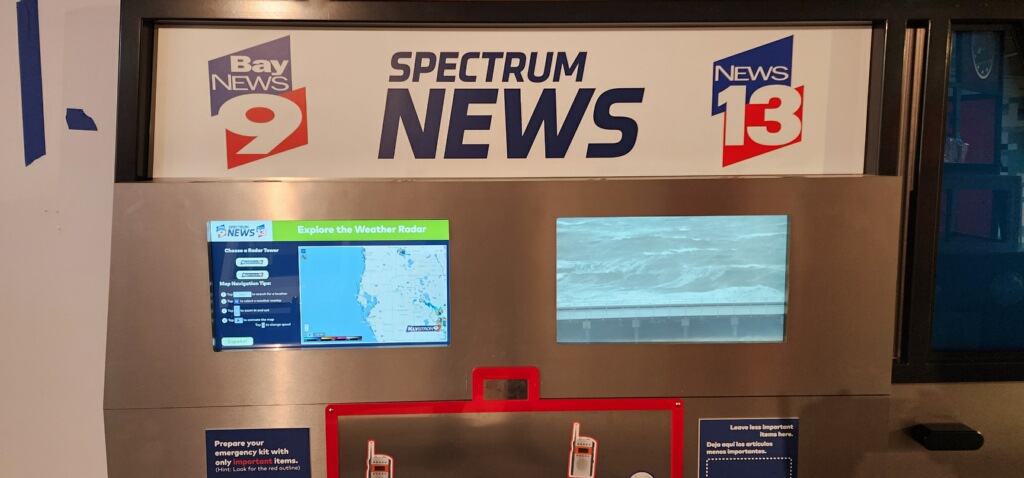
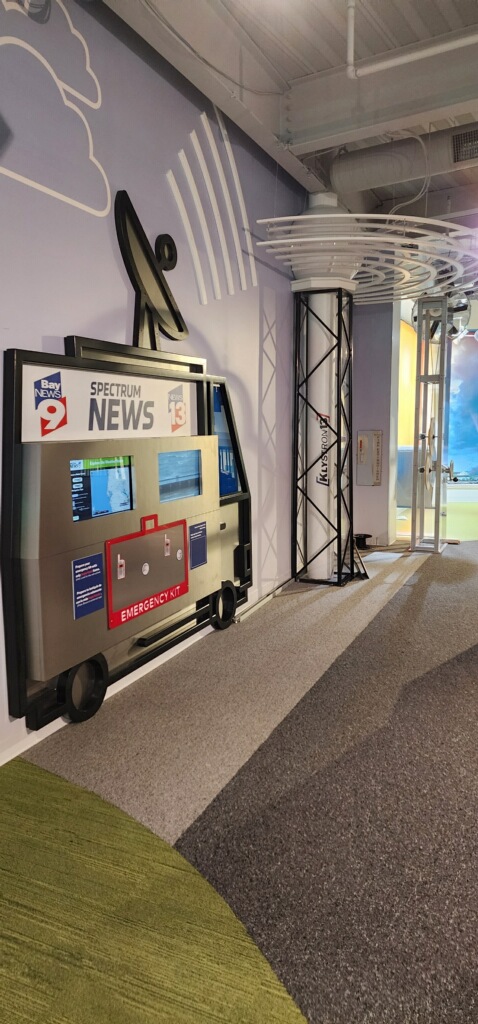
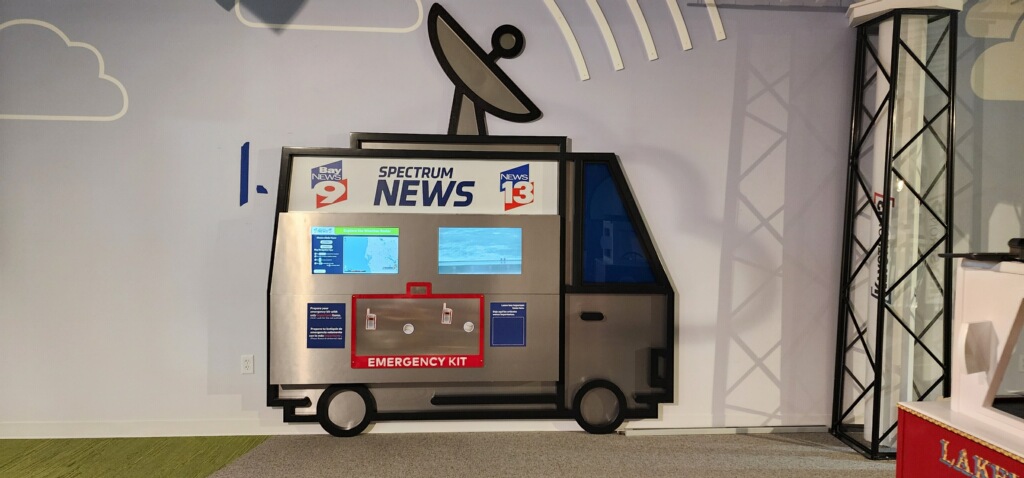
Interactive broadcast weather exhibit built into a news van cut into the gallery wall at the Florida Children's Museum in Lakeland, Florida.

The venue

What the exhibits have to survive.

47,800Square feet, two floors
4Custom fabrications, no two alike
2Languages

Sources: Florida Children's Museum; Visit Florida; Visit Central Florida. The museum succeeded Explorations V Children's Museum, which served close to two million visitors across twenty-nine years before the move to Bonnet Springs Park.

The brief

Designed to the case, not the screen.

No two of these stations shared a form factor. One lives in a road case. One sits under a bench with transducers you feel rather than hear. One is inside a news van cut into the gallery wall. One is a periscope. Each had its own screen size, mounting height, and physical controls — and all of it was designed and being fabricated before the software existed.

That inverts the usual order of work. Normally the interface decides what hardware it needs. Here the hardware was already committed, so every layout had to be drawn to a cutout that couldn't move. Get it wrong and the fix is a joiner with a saw, not a deploy.

The exhibits also had to be worth staying at. Each one is the real instrument rather than a picture of it — a mixer with actual separate tracks to isolate, a doppler radar that behaves like a doppler radar. Depth is what turns a thirty-second try into a ten-minute session, and dwell time is what the museum is actually buying.

Design the interface to the case, not the case to the interface. By the time we were writing code, the millwork was already committed. The constraint that shaped all four builds

What we built

Four stations, four problems.

01 — MULTITRACK SOUND MIXER

A recording studio in a road case

A recording studio in a road case: visitors isolate and layer individual instrument tracks — bass, percussion, keys, melody — to build an arrangement, then play it back. It's a real multitrack mixer, not a metaphor for one: the tracks are separate stems from actual recordings, and muting the bass sounds like muting the bass.

Audio is the whole exhibit, so latency was the design constraint. Tracks are preloaded and start sample-aligned, which means toggling an instrument feels instant rather than like a command being obeyed. That immediacy is what turns a thirty-second try into a ten-minute session.

Try the mixer →
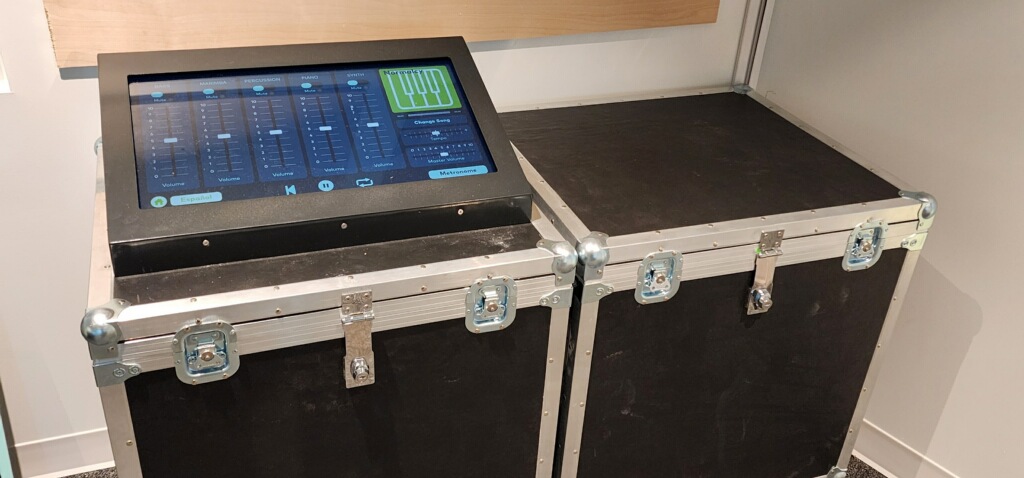
Multitrack sound mixer exhibit application running on a touchscreen mounted in a road case at the Florida Children's Museum.

02 — LISTENING BOOTH

Music you feel through the bench

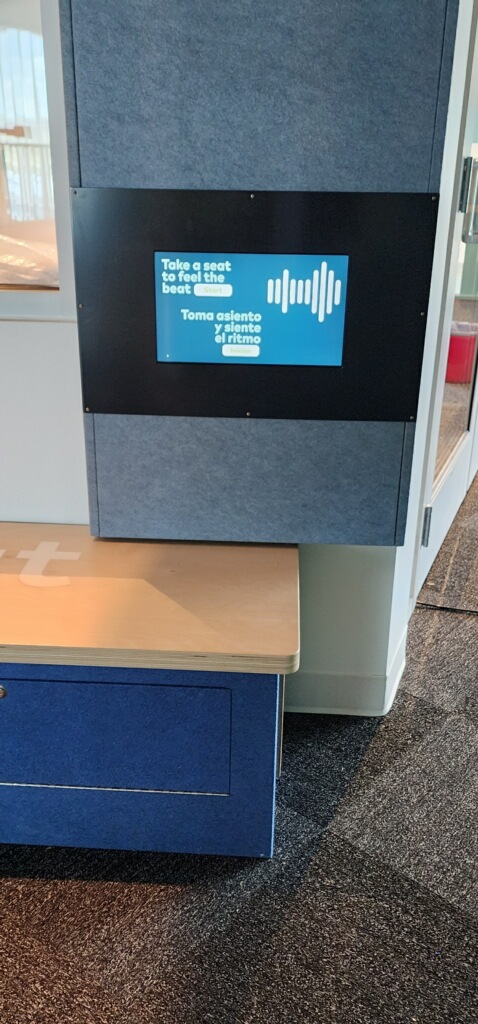
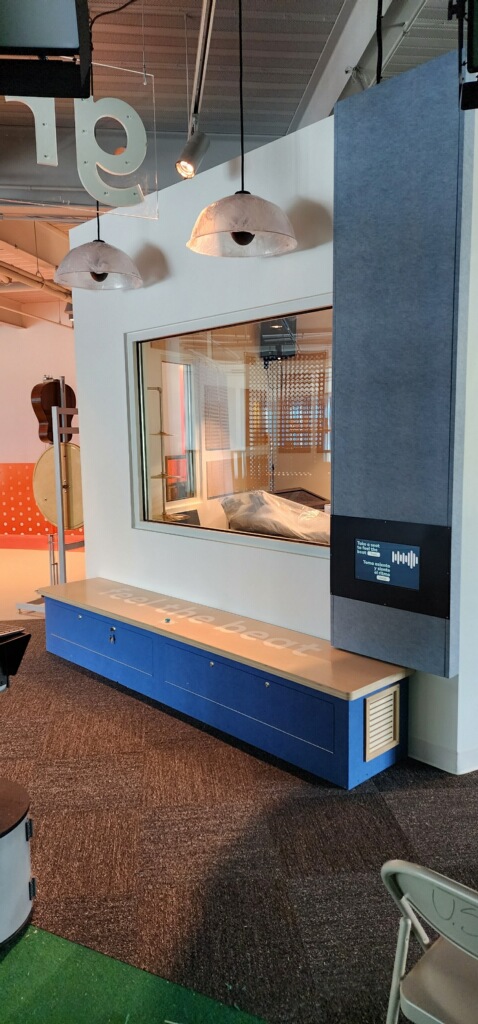
A seated station where transducers mounted beneath the bench turn the seat itself into a speaker. Visitors pick a genre and feel the low end through their body rather than only hearing it — an idea that lands because it's surprising, and because a bass line you feel in the bench is genuinely hard to forget.

The software drives both the audible mix and the tactile channel, so what the bench does stays matched to what's playing.

Try the listening bench →
Listening booth exhibit with a bench containing transducers, letting visitors feel music through the seat.

03 — BROADCAST WEATHER STATION

A news van cut into the wall

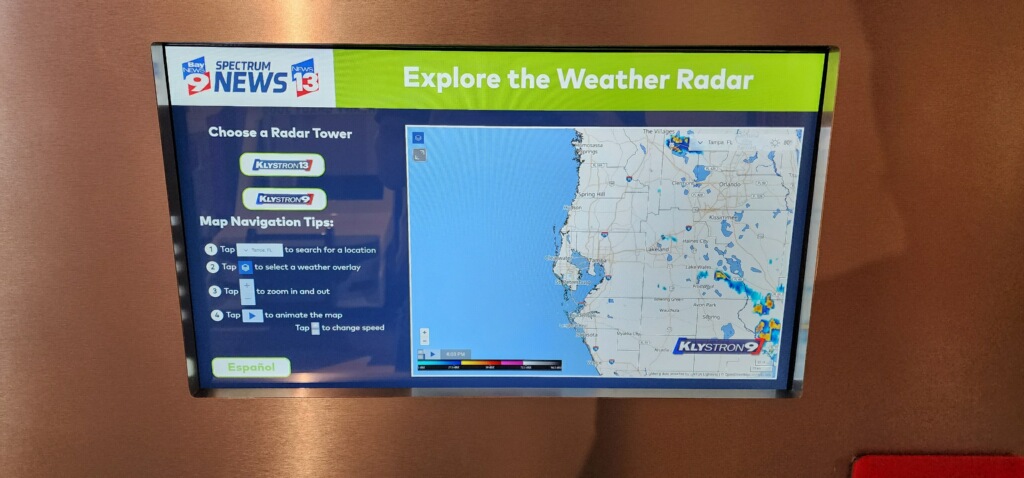
A full role-play television weather segment built into a van embedded in the gallery wall. Visitors stand at the map, work a live doppler radar, and present the forecast while the screens around them behave like a real broadcast gallery. It reads as equipment rather than as a toy, which is most of why people commit to it instead of tapping once and moving on.

Multiple synchronized displays had to stay in step with each other — the presenter view, the radar, and the output — with no operator anywhere in the loop and no one to resynchronize them if they drifted.

Multiple synchronized touchscreens running the interactive broadcast weather exhibit inside the news van.

04 — PERISCOPE

A screen that doesn't look like one

A periscope housing where the payoff is discovery — a visitor raises the handles, looks in, and finds something rather than being presented with it. The interaction is physical first and digital second, with no touch interface at all.

Exhibits like this are the strongest argument for early involvement. The optical path, eyepiece position, and standing sightline determined what could be rendered and at what scale, and none of that was adjustable once the housing was built.

Close-up of an interactive exhibit touchscreen interface at the Florida Children's Museum.

Implementation

Built for the worst Saturday.

A busy Saturday is the hardest environment installed software ever faces. Every station gets used continuously for hours, in a building where staff are supervising a floor rather than nursing screens. Visitors are also inventive about finding edges — if there's a way to get an interface stuck, someone will find it before lunch.

Angled view of the news van broadcast weather exhibit installed in the gallery wall at the Florida Children's Museum. Close-up of the listening booth touchscreen interface showing genre selection.
Left: the news van in its wall cutout. Right: genre selection on the listening bench.

Outcome

Four galleries, one codebase.

All four stations shipped on the museum's fabrication schedule and have run in daily public operation since opening. Because they share a common application core, a fix or an improvement to one station's reset behaviour propagates to all four — which is also why a fifth station would have cost meaningfully less than the first.

The measure that matters in a building like this isn't uptime. It's dwell time — whether a visitor who has already walked past a dozen other things stays at your station long enough to get somewhere with it.

Try the sound mixer →

Working on something similar?

We build the software inside exhibits.

For museums directly, and as the software partner for exhibit design and fabrication firms.